
Learning Resources 305 with Ted Stenerson. It was a photography class I took at Western Illinois University in the fall of 1981. A mid-level class where we refined and improved on technical aspects and composition. I had immediate respect for Mr. Stenerson, as he was 180 degrees apart from the pretentious instructors I’d encountered at SIU-Carbondale. Ted was like a good coach, he knew how to bring out the best in someone without belittling them. WIU didn’t keep Ted because he didn’t have an advanced degree. That is unfortunate, as he was a great professor. Knew what he was doing and worked well with students. He may be living in Florida these days, and I’d be thrilled if this blog finds him.
The class was in Memorial Hall. Along with Ted was Paul Lee, the man who ran the “cage,” the room behind the counter where we checked equipment for the darkroom in and out. Paul was from Plymouth, IL and was a legitimate cowboy when he wasn’t working his day job at WIU. Into horses and rodeo, he usually dressed the part, and he walked with the “gimp” of someone who’d been bucked from the saddle more than a few times. A great guy, he passed in 2018.
The final project for LR 305 was a “picture story” or photo essay. The story was to contain 10 photos, and the subject matter was entirely up to us. I don’t believe this class involved any aspect of color. If so, we were given the choice of using color or black and white. I chose black and white. Each of the 10 prints were to be mounted on matte boards, numbered in sequence of presentation, and captioned on the back of the matte. A photo story usually contains a “lead” photo, which acts to introduce the subject matter, and the “closer” which acts as the “period” to end the story. In between are photos that fill in the rest.
I chose to document/photograph livestock truck drivers. My Uncle George worked in that industry as the owner of Saylor Livestock, I’d have unlimited access to whatever was going on at his business. Having worked for him for two summers, I knew the drivers and enjoyed spending time around them and the hogs and cattle. I used Thanksgiving break to work on the project, as it would allow for multiple days of shooting and a variety of situations while home in Pittsfield.
That plan worked well. I spent time at the office and barn, took a short trip to nearby Barry, IL to get a load of hogs from a farmer, then took a longer trip to the National City Stockyards in East St. Louis, IL to deliver hogs to market. I believe I worked three days, and shot three or four rolls of film. The negatives bear witness in that, many times, I made only one frame per situation. One Nikon FM body, along with three lenses, a 24mm 2.8, 35mm 2.0, and 105mm 2.5, were my “tools.”
Brief descriptions of each photo, and any relevant technical information are listed below.
Photo 1. Terrell Stearns behind the wheel on our way to the National City Stockyards. The “lead” photo. The obvious truck driver frame. 24mm lens, I was standing/kneeling on the passenger seat with my head backed into the corner of the cab, trying to get as much context in the frame as possible. A wider lens such as an 18mm would have been nice to have!
Photo 2. Donnie McLaughlin, left, and his step-son, Ronnie White, drive cattle from a holding pen into a barn for shipping. I stood in a feeding trough like the one seen in the background. Cattle are typically hard to drive towards someone so I stood up for that reason, and for the “taller” angle. Either the 24mm or 35mm lens.
Photo 3. Vern Sevier, speaks to Mr. Gentry, who was bringing in hogs. Vern was a driver and helper. I was riding “shotgun” with him on an errand and we stopped for a quick exchange. I thought using the door and window of the pickup truck as a frame looked might look good.
Photo 4. Tom Fesler inserts aluminum decking into a trailer to convert it from hauling cattle to hauling hogs. That 24mm wide angle lens really helped for this one, though I had to be willing to crawl, duck, and get pig shit on my knees to get the shot.
Photo 5. Vern Sevier again. Using the mirrors of the tuck to catch him, with the holding pens in the background.
Photo 6. Ronnie White, a helper, waits by the door, watching for a load to arrive. This photo… It was NOT staged. I took ONE frame of this, still learning light, exposure, and how to use the light meter in the camera. When I processed the film I was disappointed and shocked at how the negative looked, believing it was an underexposed throwaway. It looked “thin,” ( a term meaning the shadow areas of the neg lacked detail) When I made an attempt to print it, the “Oh, WOW” moment happened. Though not intentional, I had used the camera meter to read and exposure the light coming through the door. It’s been said National Geographic photographers “expose for the highlights and let the shadows fall where they may,” making for that beautiful, contrasting light. This was a learning moment, and the first really good example of achieving that “look.” This photo has received several compliments and sold a few copies. Some have said it resembles a Dust Bowl era photo.
Photo 7. Vern yet again. We had gone to the Schnepf farm near Barry to sort and load hogs. Vern holds the “hot shot”, Carl Schnepf is in the middle, and one of his sons is at left. To make this photo, I used the open air slots on the side of the trailer and treated them as a ladder to climb to the roof of the trailer.
Photo 8. Uncle George, left, confers with Donnie McLaughlin in the office.
Photo 9. Terrell Stearns backs his truck into a chute for unloading at the National City Stockyards. The skyline of St. Louis, MO is seen across the Mississippi River.
Photo 10. Vern Sevier. This portrait was staged but not posed. I did not feel there were any candid moments strong enough to be the “closer,” so I asked Vern to stand next to the trailer. He leaned in and his body language made it “That’s got it,” I thought.
Photo 11. Mr. Stenerson’s notes on the back of the last board. The story received a 97 of a possible 100.
P.S. Many who drove for George are not included in this project. Depending on the time period, drivers came and went. I’d like to list as many as I can think of, and would like to thank Gene Stickman (who was a driver) for his help. Those guys were/are, in no particular order… Earl “Tuffy” Richards, Denny Richards, Vern Sevier, Tom Fesler, Terrell Stearnes, Donnie McLaughlin, Gary Guthrie, Gene Stickman, Ronnie White, Roger Harshman, Terry Yelliott, and Merle Springer. Great guys all.
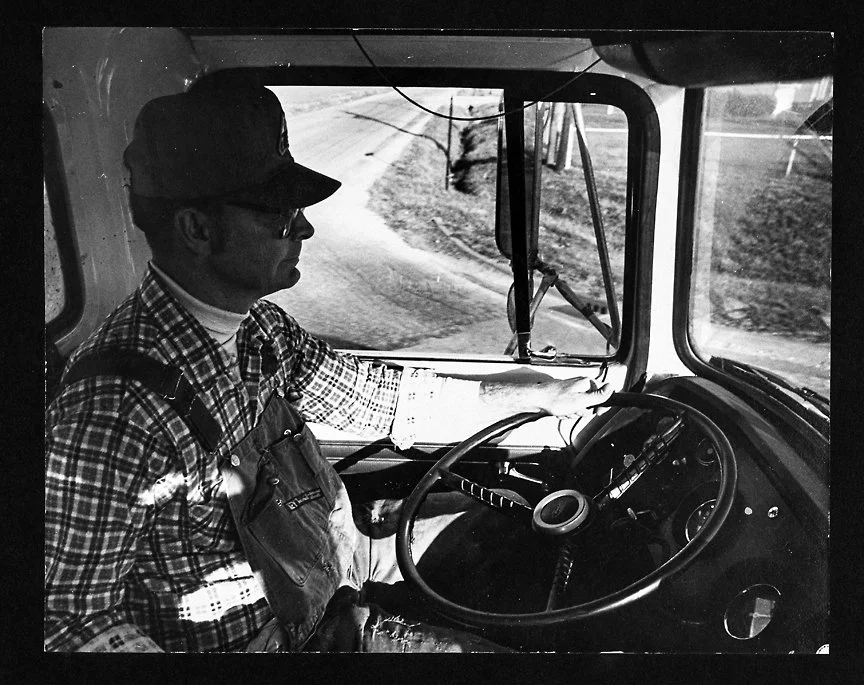
Terrell Stearns drives a load of hogs to the National City Stockyards in East St. Louis.
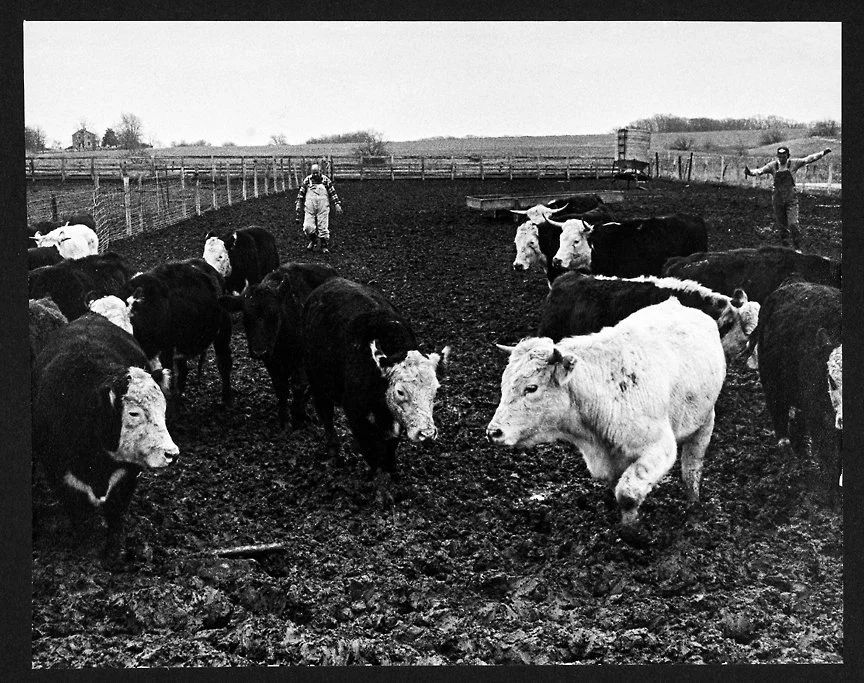
Donnie McLaughlin, left, and Ronnie White, drive cattle into a barn from a holding pen.
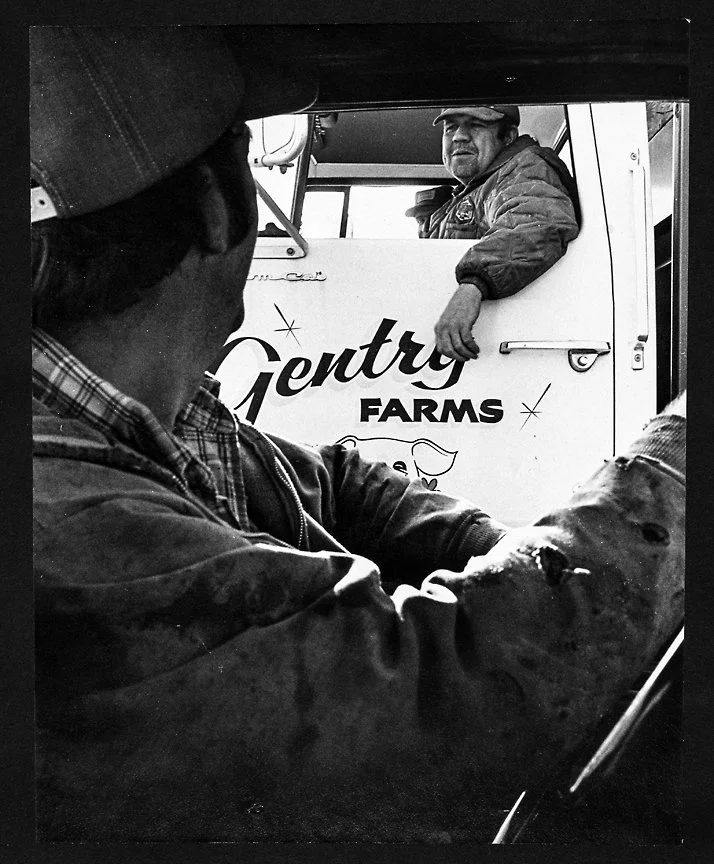
Vern Sevier stops briefly to speak with a local farmer who was bringing in hogs for market.
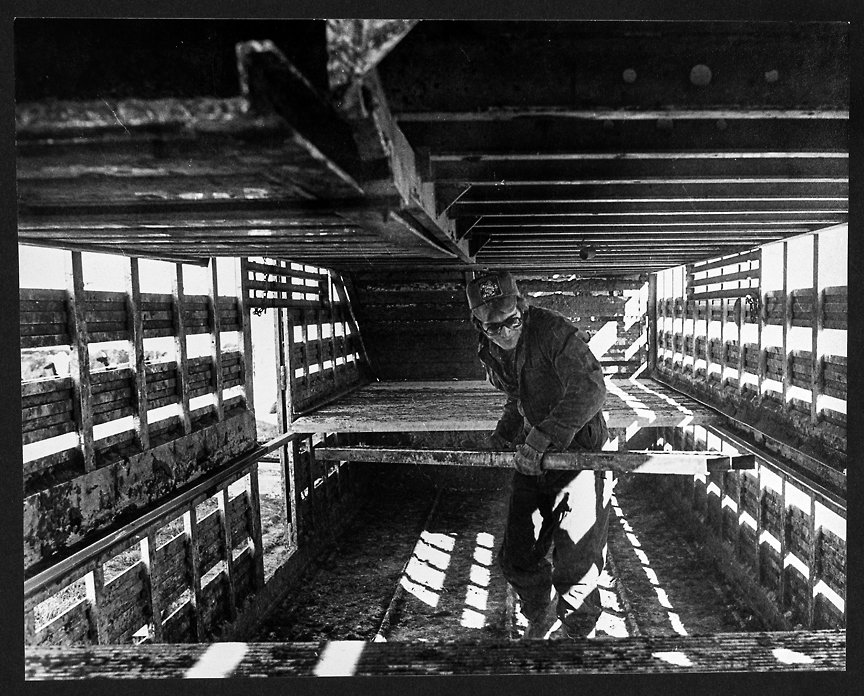
Tom Fesler inserts decking into a trailer to convert it from hauling cattle to hogs.
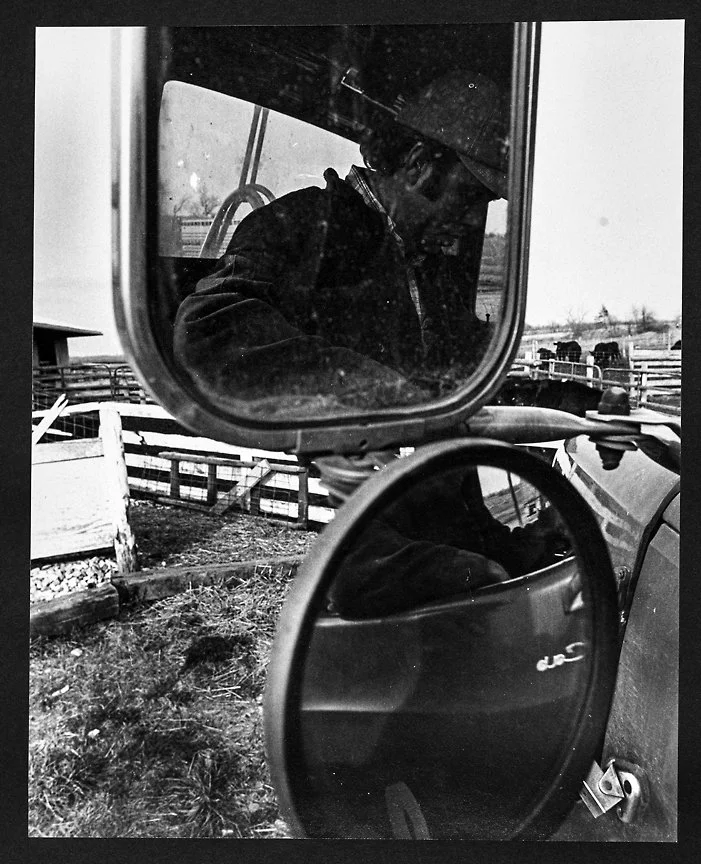
Vern Sevier.
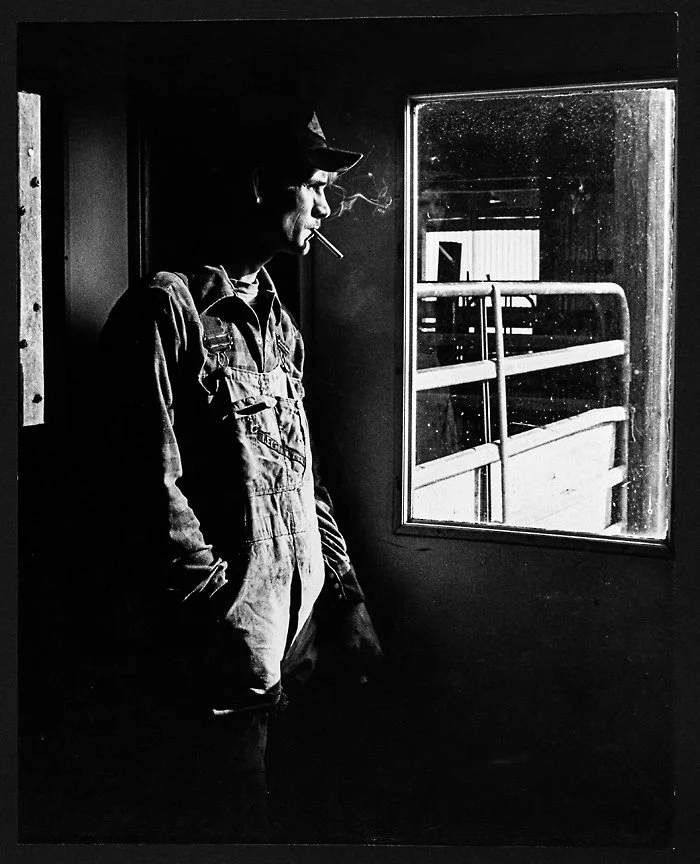
Ronnie White watches and waits for another load of livestock to arrive.
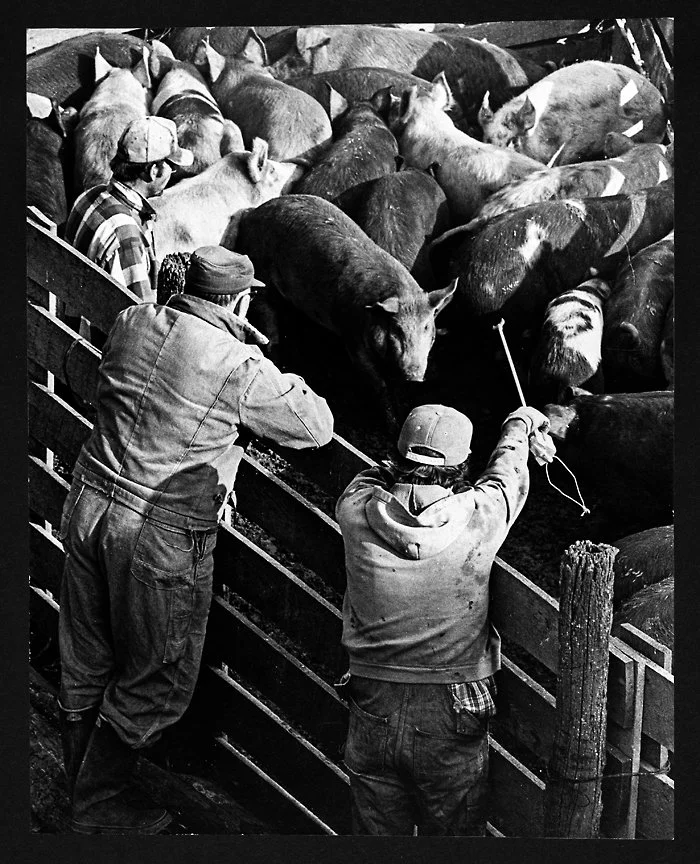
Vern Sevier, right, sorts hogs at Schnepf Farms near Barry.
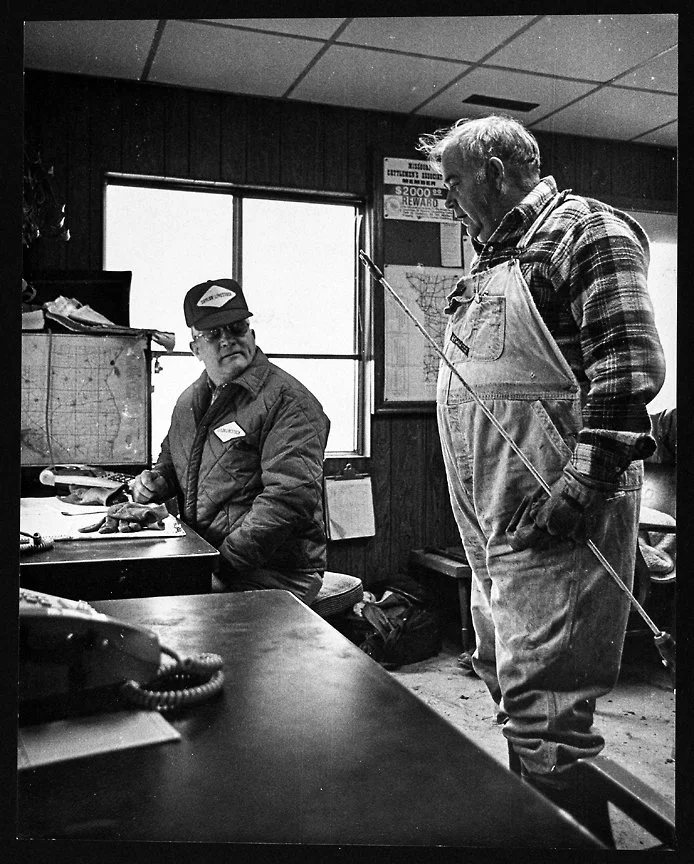
George Saylor, left, talks to driver Donnie McLaughlin.
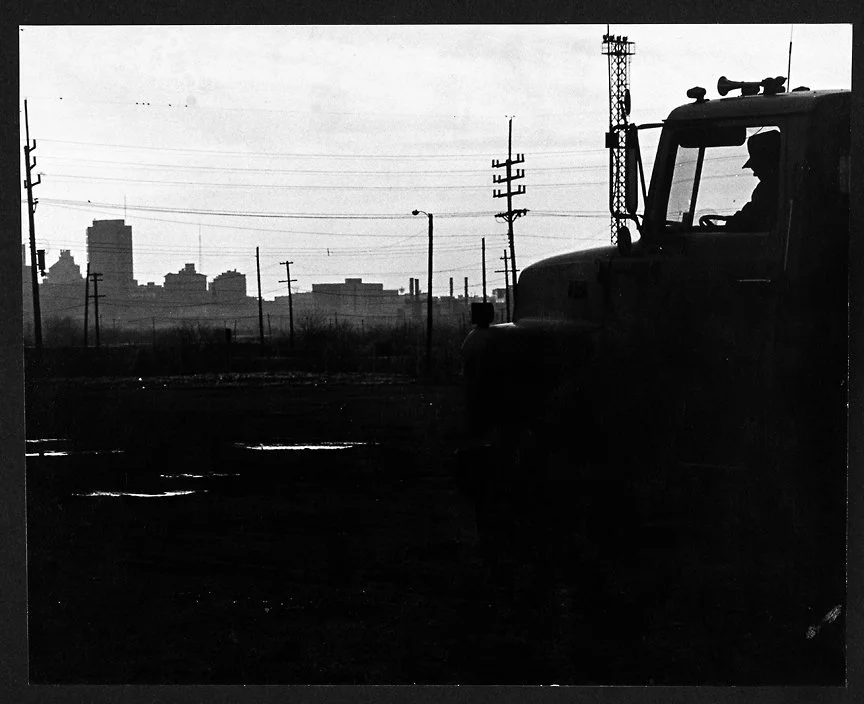
Terrell Stearns backs into a chute at National City Stockyards with the St. Louis, MO skyline across the river in the background.
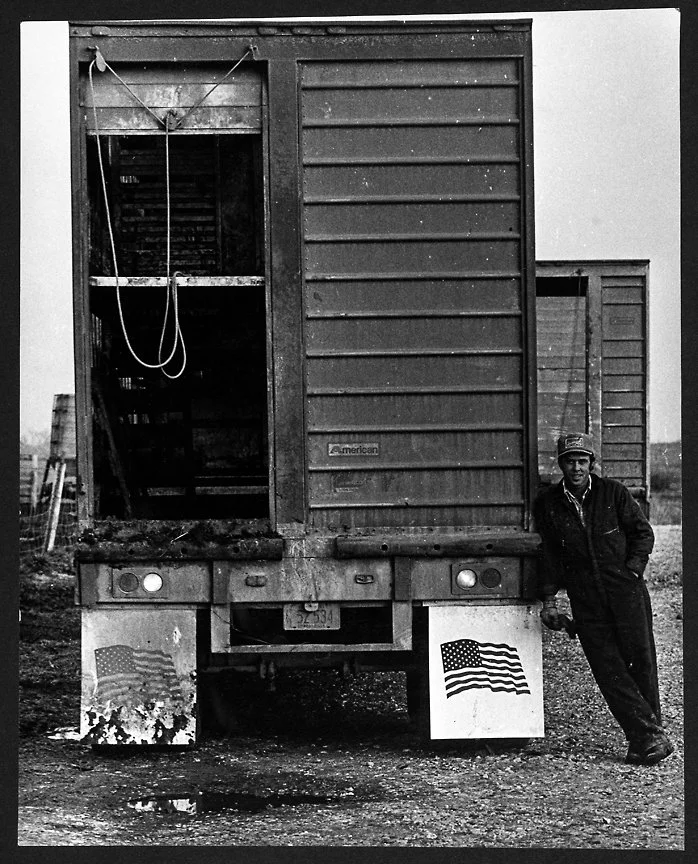
Vern Sevier poses for a portrait.
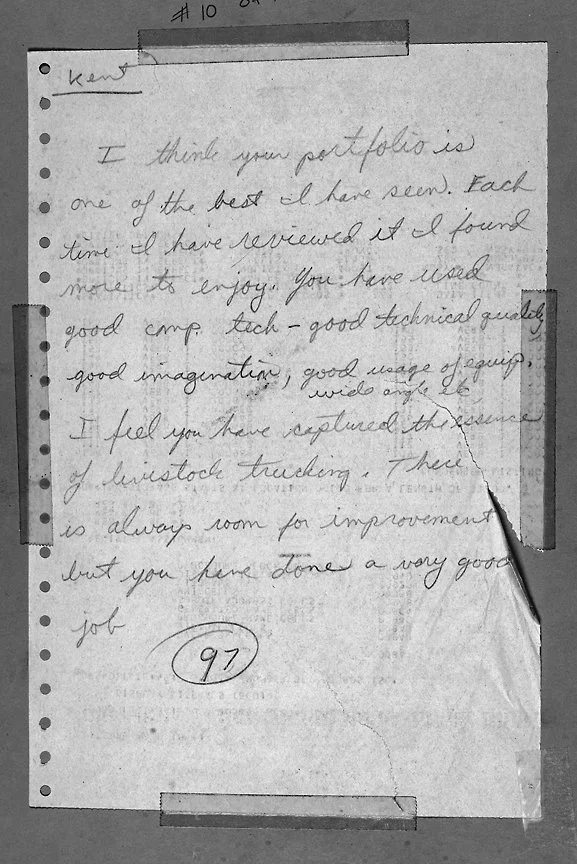
WIU professor Ted Stenerson’s notes and score on my project from Learning Resources 305 in 1981.