Henry. Henry Diltz.
Not a “household name” by any standard. If you study photography, especially rock and roll photography, he’s a legend. Mr. Diltz was an influence on me for sure, and what sets him apart from other photographers is how he came about it.
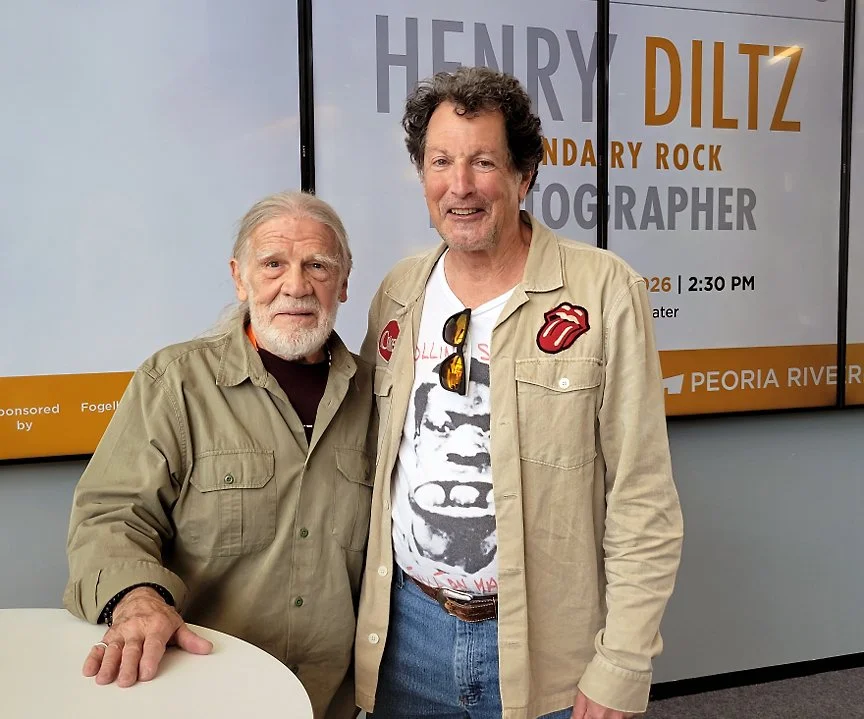
Henry gave a presentation in Peoria on April 19th and my friend Brian Ervin and I attended. Diltz is the only rock and roll person, in the long line of rock photographers who I admire, I have been able to meet. Though I do have books, inscribed by Baron Wolman, Ethan Russell, and Dominique Tarle. It was a thrill and honor to meet Henry, his program was great.
Diltz was a member of The Modern Folk Quartet when he and the band walked into a thrift store in East Lansing, Michigan in the early 60s. He bought a second-hand camera for $20 and quickly learned, got better, and advanced. What made him different was his lack of formal training, photography came to him by accident.
Access. Any photographer will tell you access is one of the most important pieces of the puzzle when it comes to being able to make great photos. As a musician himself, and being friends with many other musicians, Henry was around his peers in informal settings, a “fly on the wall” if you will?, His photos were a combination of “captured moments,” and eventually, more conceptual.
Diltz was in at ground level when the rock music scene took off in the mid-60s, spending time in New York City when he photographed The Lovin’ Spoonful (John Sebastian was his friend). A photo session with The Hollies came soon after. Henry was on his way and his reputation grew.
As stated earlier, many of his best works were made when he was simply hanging out with his friends and peers, often imbibing in “God’s herb.” he stated in Peoria. A lot of his photos were made in Laurel Canyon, the area a home for a “who’s who” of rising stars at the time. He was the official photographer for The Monterey Pop Festival, the Miami Pop Festival, and Woodstock. Diltz has 250 album cover credits to his name, most notably The Doors ‘Morrison Hotel,’ and the debut album by Crosby, Stills, & Nash. He worked extensively with The Eagles, America, and The Monkees early in his career.
Brian and I encountered him in a hallway before the program, I recognized him immediately. We stopped, shook hands, and I was able to ask him a question or two I was most curious about. “How many rolls of film did you take to Woodstock, and how in the hell did you sleep,” I inquired? “I took naps in my station wagon behind the stage,” he replied. He thought about the film question for a bit and then answered, “I’d say 50-60 rolls.”
His slide show presentation did not disappoint, giving a sold-out crowd at the Peoria Riverfront Museum giant screen theater a first hand glimpse into the photos and stories behind them. The Doors, first two Eagles records, and Crosby, Stills, & Nash tales were especially good, all of them amazing.
Diltz talked off often working with Gary Burden, an art director who was equally as good at his role as Henry was with his cameras. One day they showed up at Joni Mitchell’s house for a session. Joni was leaning out a window waiting for them, “Good morning boys,” she said. Diltz photographed her in that moment, not formally posed and totally spontaneous. It’s an iconic image of a young Joni.
Other album covers that stand out are the first album by Jackson Browne, ‘Sweet Baby James’ by James Taylor, Dan Fogelberg’s ‘Souvenirs,’ and Stephen Stills self titled album (Stills strums an acoustic guitar in the snow by the pink giraffe.)
Diltz worked near exclusively with available light, rarely using flash, making his work less polished and more natural.
Saving his Woodstock story for near the end. I was a little surprised he didn’t go into more detail and show more photos, but it was interesting to hear how he got there in the first place. “Chip (Chip Monck, a lighting designer and stage/set builder) told Michael (Michael Lang, Woodstock promoter), "We need Henry.” Diltz was in L.A. when Lang called. “They sent me a plane ticket and $500,” Diltz recalled. He made it through the weekend (the festival spilled over into Monday morning), “I was napping when I heard Hendrix doing his set.” I got up there, just to his right, and began snapping photos. Hendrix, feet away, in a white-fringed jacket, playing a white Fender Stratocaster and playing the Star Spangled Banner is another moment frozen in time, for the ages, courtesy of Henry.
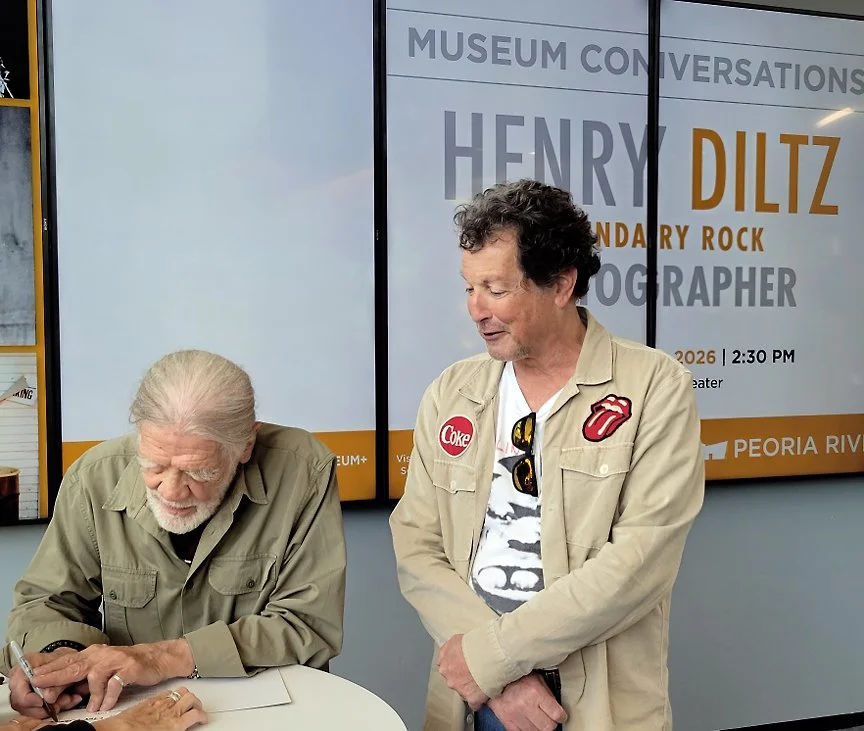
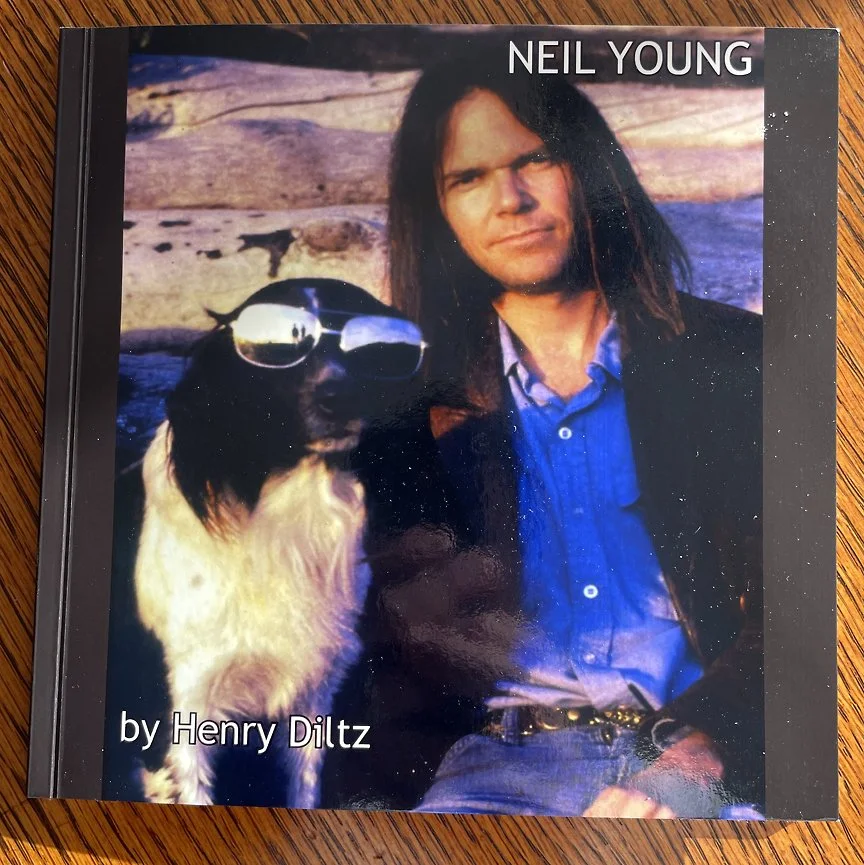
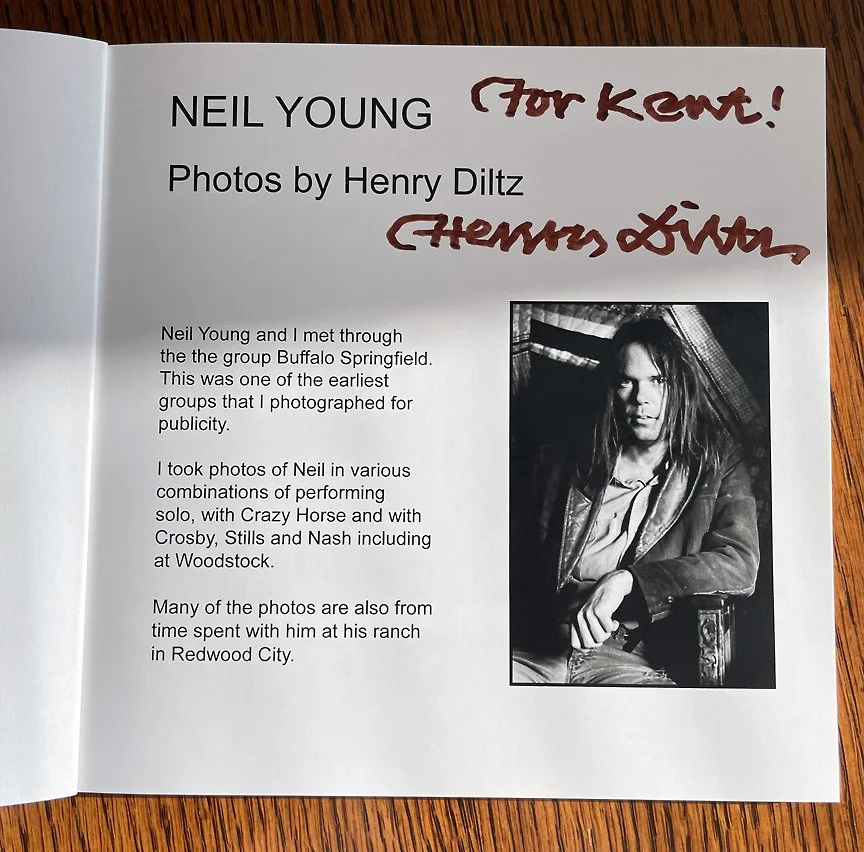
With the program over, Diltz retreated to the lobby and a receiving line. Kind, gracious and patient as he signed small books and prints. I chose a book of photos of Neil Young, an old favorite of mine and someone Henry has worked with and known since Young’s days with The Buffalo Springfield.
Henry will be 88 years old September 6th. Those cameras have taken him places, and made him a living legend. He couldn’t possibly understand what great experience it was for me to meet him.