Sometime around 1968 or early 1969, Gus Traeder and a friend were having coffee together when an idea was born. Traeder owned and operated TNT Speed and Sports Center in West Quincy, Missouri. TNT sold motorcycles and had a go-kart track in back which hosted numerous National events. ABC television’s “Wide World of Sports” covered at least one of them. Traeder’s son Terry was a great driver, and I can remember a few names who passed through there on their way to bigger things, Paul Tracy and Lake Speed are two of them.
Traeder and his buddy thought, “What about having a race in Quincy’s South Park?” The road through the park has multiple curves and elevation changes and would provide a perfect setting. The karts would run clockwise over a 1.2 mile course featuring 12 corners. Interior roads would be used for the pits. Working with the city of Quincy, permission was granted, planning took place, the race was born and was an instant success. In the early years, the race coincided with Quincy’s Dogwood Festival but took its own weekend later, moving from early June to late June as it runs now.
The scale and layout of the track is perfect for karts, making it comparable to the legendary Nurburgring in Germany, once used for Formula One. That course is 14 miles around, features 176 corners and many elevation changes. The “Ring” has the famous “Karussell”and the park has its own version, the “Horseshoe.” The Ring has the “Flagplutz” (airport in German), where cars become airborne cresting a hill, South Park has a downhill section with a dip, often causing the karts to take flight, bottom out, and make for challenging landings entering turn 1.
I’m not sure I was at the first race, but am pretty sure I was there for the second, usually accompanied by one or two older cousins. The racing was great and Traeder ran tight programs with little downtime between races. The smell of burning fuel was sweet and intoxicating. Looking forward to the races each year, I don’t think I missed one until I moved to Chicago in 1987. We usually sat outside of turn 1 to catch the action that was bound to happen. Those who came with me changed some as well, and as I got older, the tradition was to throw down a blanket, have a cooler filled with Heineken, some Swiss cheese, and of course my camera. (I have a bunch of color slides from the early-mid 80s I need to digitize).
The early years were wild. Though straw bales were used to protect drivers from stone walls, trees, and other major hazards, for the most part it was only a kart and the curb. Fences were non-existent, spectators darted across the track in the middle of races! Attendance grew every year, by the mid-late 80s, approximately 15,000 jammed the park to watch FREE racing, some bringing grills and making a day of it.
As the years progressed, so did safety and liability. Fences were placed in the most critical areas to keep spectators where they belonged. The fence lines moved back over time as well. Now there are only wo points of entry to move from one side of the track to the other, both gated and controlled and only possible between races.
Eventually, all involved in producing such an event took it’s toll on Gus Traeder. After a 32 year run, the last race was held in 2001. Terry Traeder, Gus’ son, resurrected it in 2018 for four more years, ending in 2022 when it appeared the event was gone for good until…
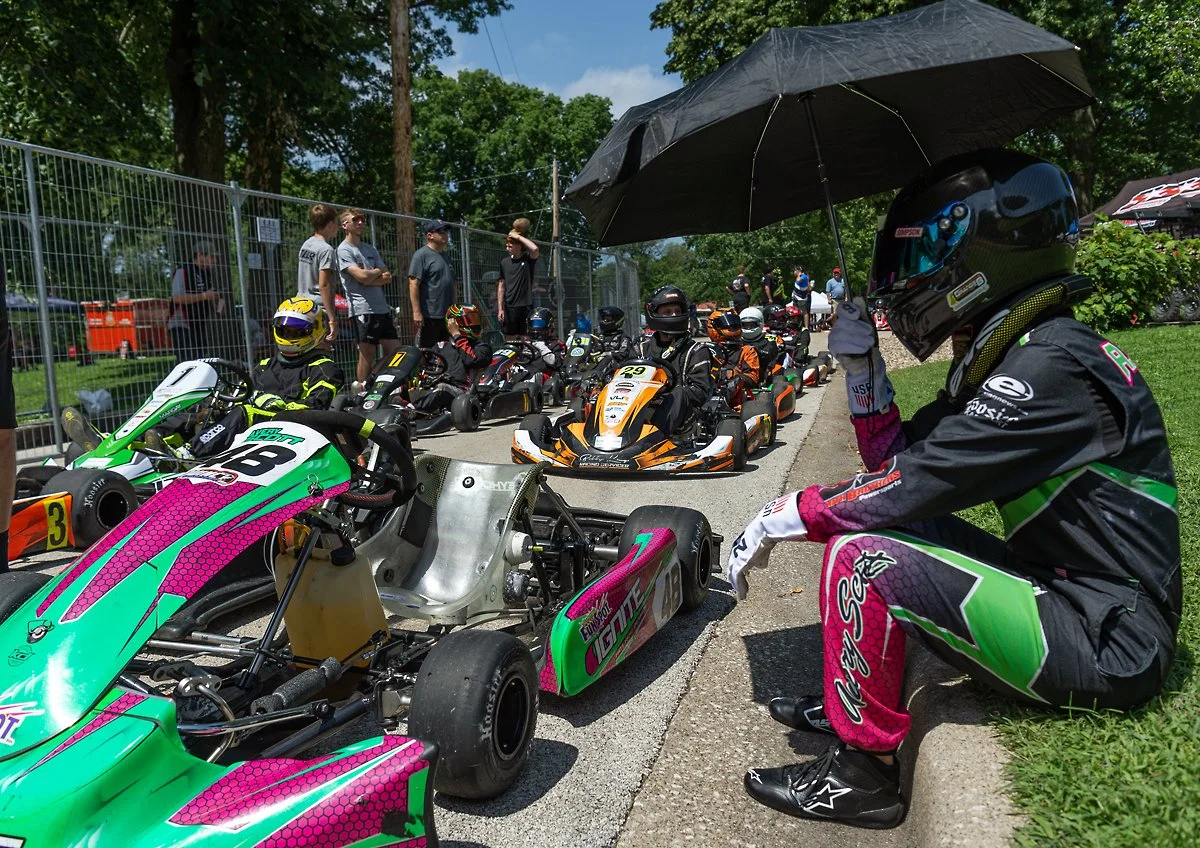
2024 when Jeff Scott, a Quincy businessman and avid kart racer himself, brought the race back as its promoter/organizer. The karts are back, numbering in hundreds of entries for different classes, spectator attendance is growing. Jeff and his staff of volunteers begin preparing the park and track the Monday before the two day event of racing on Saturday and Sunday, the amount of work involved to place straw bales, fences, and track walls is massive and expensive.
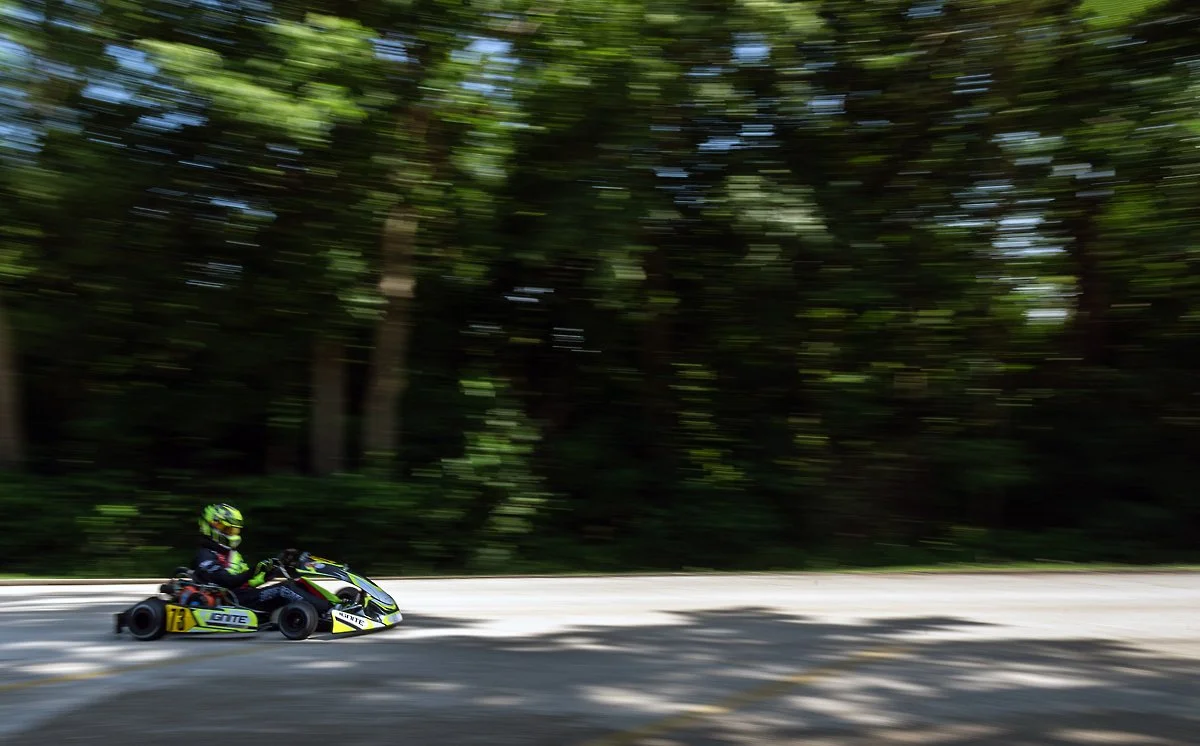
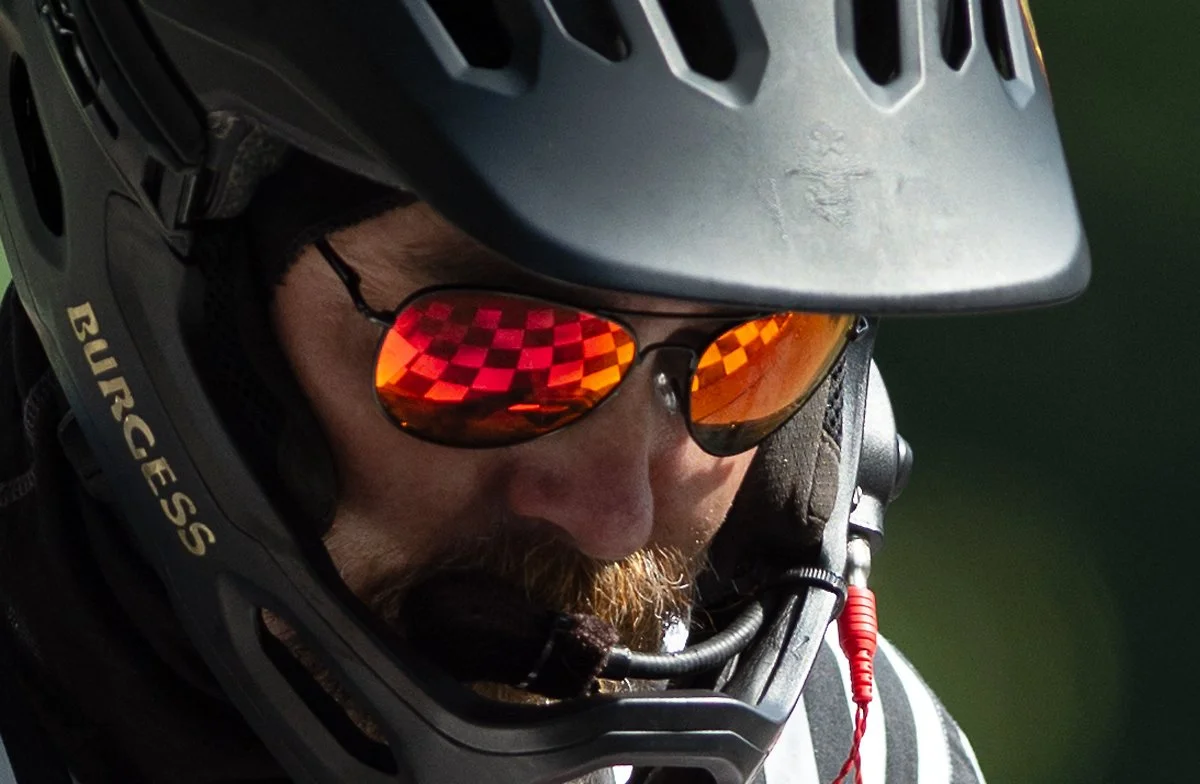
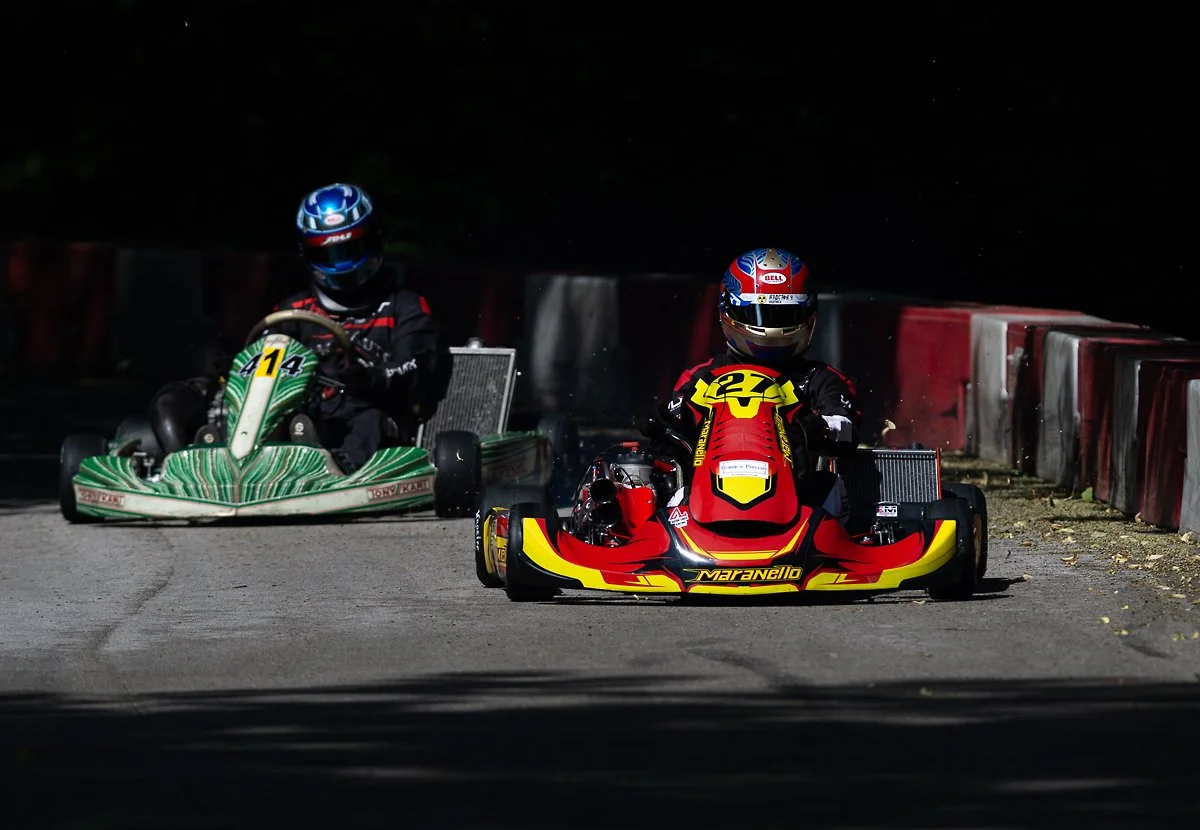
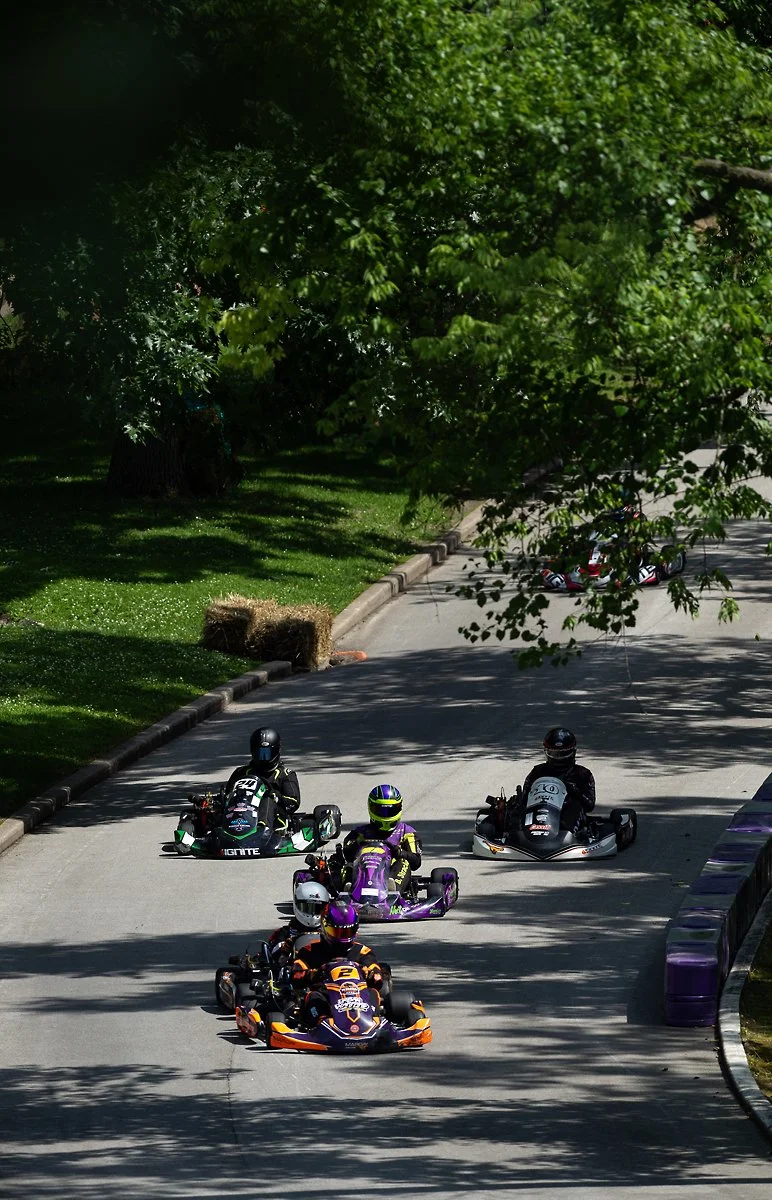
I always enjoyed being a spectator, never seriously thinking of applying for photo credentials and turning it into work. That changed last year when I contacted Jeff, explained who I was, what I do, and my love for the event. Jeff allowed unlimited access and I covered the day, logging 15,000 steps in the hilly park. I shot well but made mental notes on how to improve should I return. I did so, once again with the ability to work from anywhere in the park. Using the access to the best of my ability from various vantage points, shooting down on the karts, mere feet away, as they buzzed under me, setting a remote inches from the track (mixed results once again). I tried to make it to every area, using the beautiful park as context. The trees made for wonderful pockets of shadow and light. As many as four cameras and four lenses were used to document the racing.
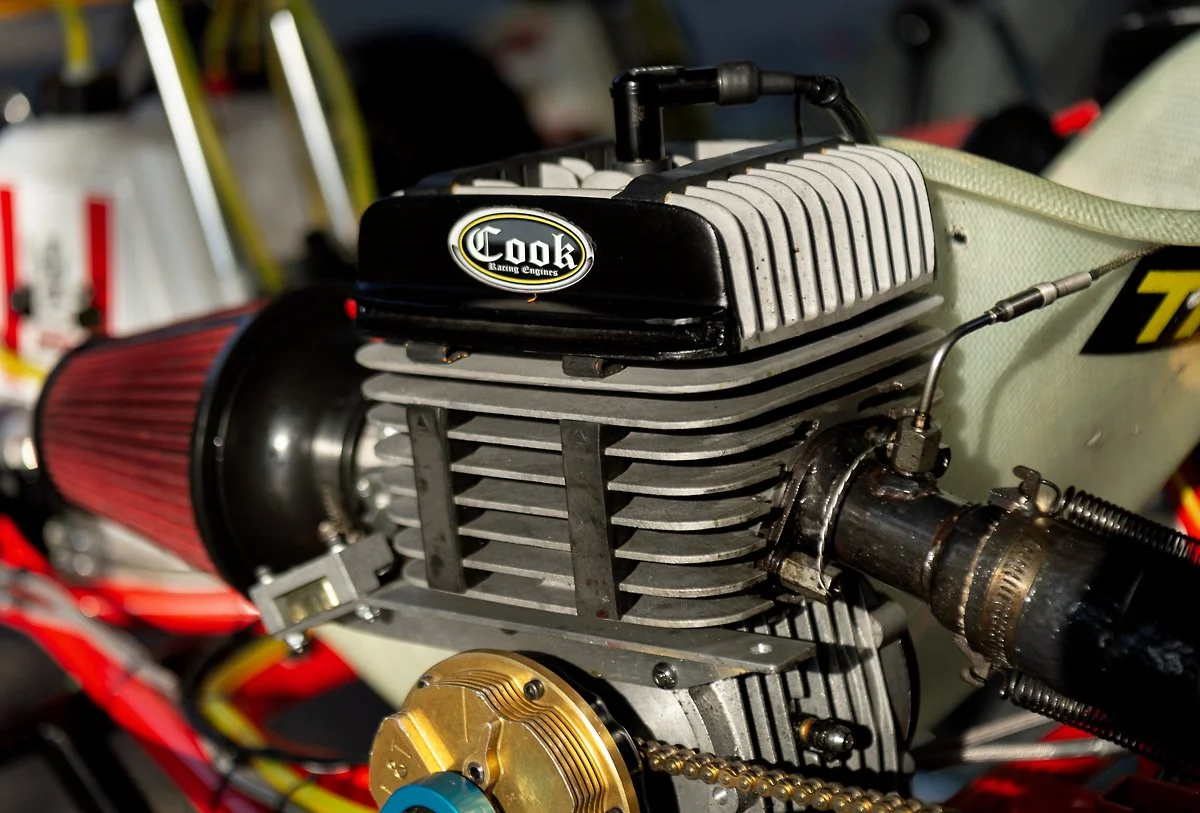
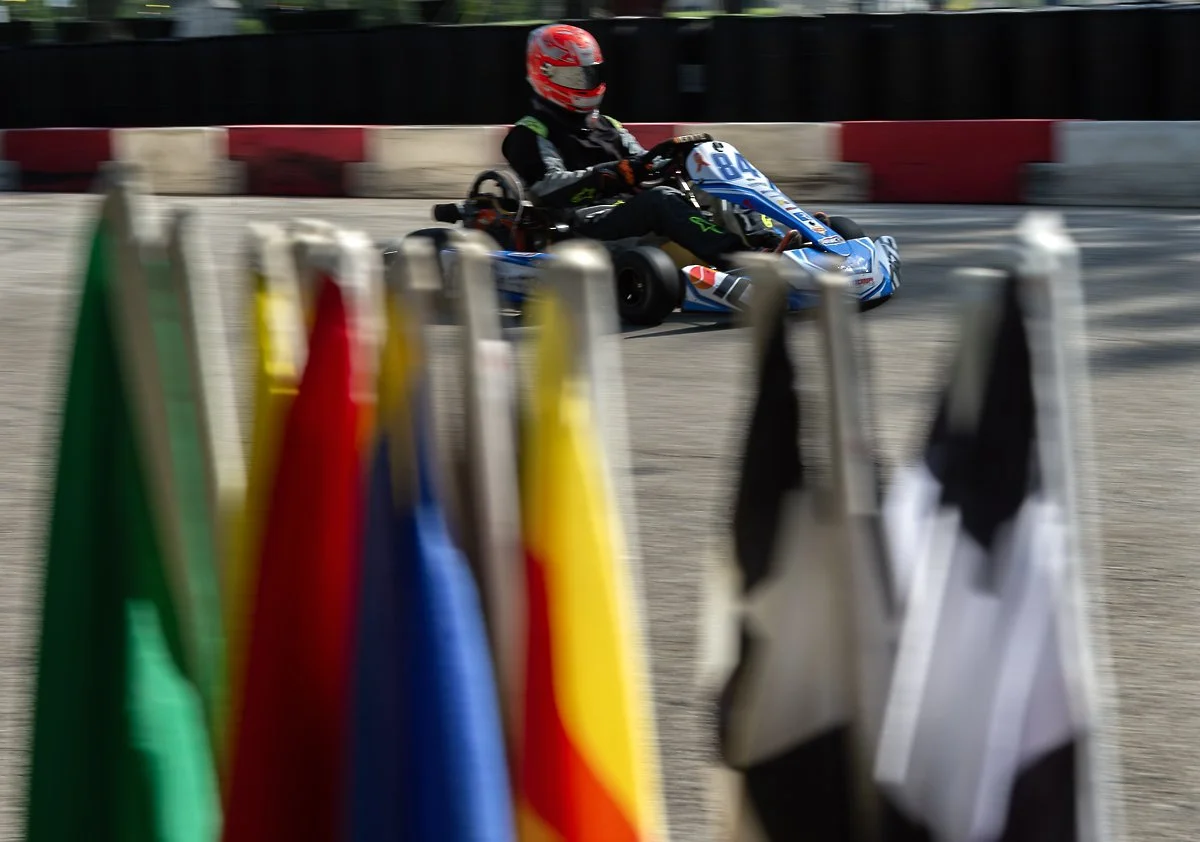
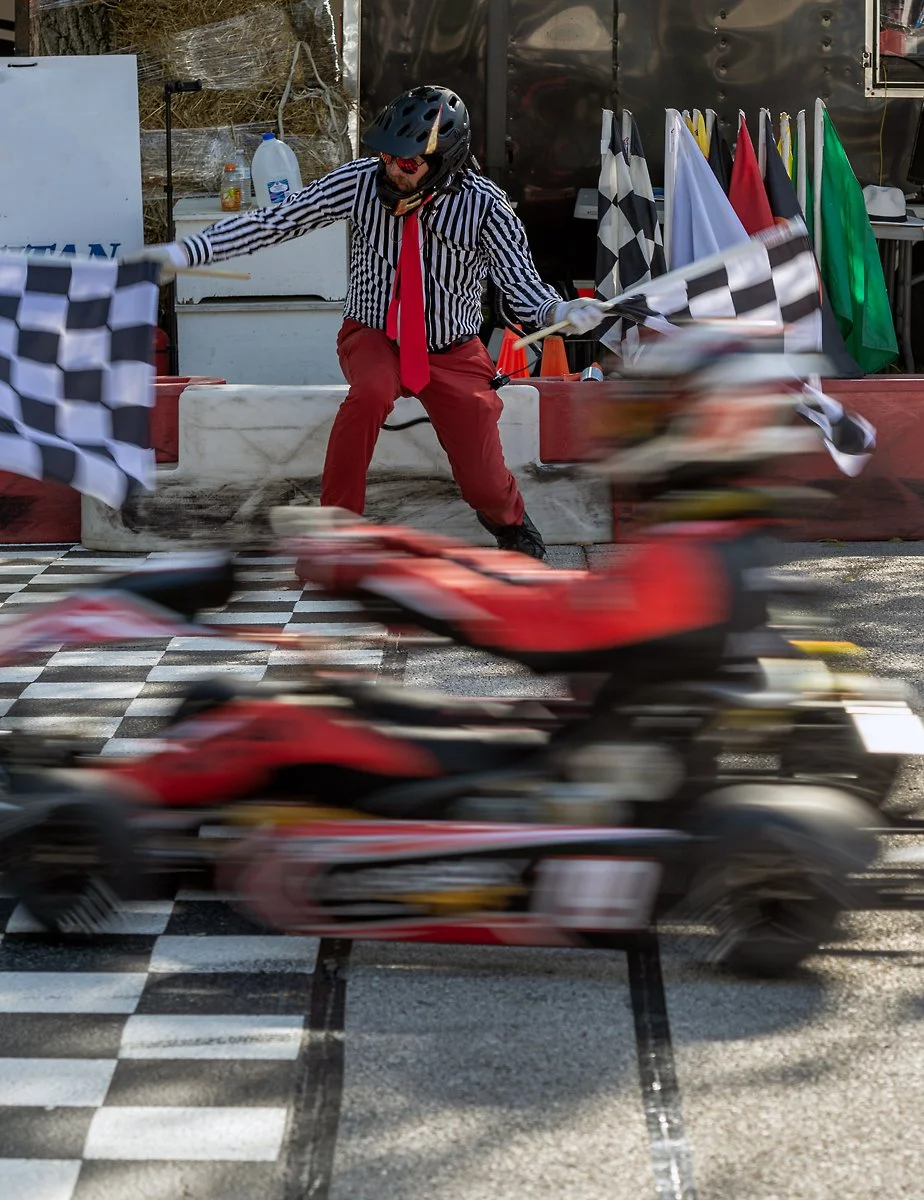
If you read yesterday’s blog about Darren Heath you know what an inspiration he is, I was “channeling” him as I worked. Here are eight images from this year, a gallery of 25 are on my facebook page. Kent on facebook